


Paced bottle feeding is a baby-led feeding technique that slows milk flow so your little one controls the suck, swallow, and pause rhythm, just like at the breast. It works with breast milk or formula and gives your baby a real say in how much they eat and how fast.
Two things happen when you feed this way. Babies get better at recognizing their own hunger and fullness cues, and breastfed babies transition to a bottle with less confusion about the two different flows. Most paced feeds take 15 to 30 minutes, which is longer than a typical bottle feed. That’s the point.
Here’s what to expect once you start:
- A near-horizontal bottle hold, not the classic tilted-up position
- Short pauses every 20 to 30 seconds to let your baby catch up
- A feed that takes real hands-on attention, not a propped bottle and a free hand
Table of Contents
What Are the Benefits of Pace Feeding with a Bottle?
The biggest win is control. When your baby has to work for each mouthful instead of getting a steady gravity-fed stream, they naturally stop when they’re full instead of finishing a bottle out of momentum. That single shift addresses one of the most common bottle-feeding worries new parents bring up: overfeeding.
Paced feeding also smooths the path between breast and bottle. Bottle-feeding tools guidance from KellyMom notes that slow-flow nipples keep babies actively drawing milk rather than passively swallowing it, which lowers the odds a baby develops a preference for the easier bottle over the breast. That matters if you’re pumping and bottle-feeding while still nursing.
There’s a comfort payoff too. Slower, more controlled feeds tend to mean less air gulped with each swallow, which can translate to a calmer baby and fewer spit-ups after the bottle. Healthline describes paced feeding as a way to mirror breastfeeding’s natural rhythm, which can ease digestive discomfort for babies who’ve struggled with gas or fussiness on a regular bottle.
Quick benefits recap:
Related Articles:
Starting Solids: Complete Guide to Introducing First Foods and Baby Weaning
- Supports self-regulation and reduces overfeeding
- Eases breast-to-bottle transitions and lowers nipple preference risk
- Can reduce gassiness and spit-up from slower, calmer feeding
A leftover ounce in the bottle isn’t a failed feed. It’s often a sign paced feeding is doing exactly what it’s supposed to do.
How Do You Pace Feed with a Bottle Step by Step?
Getting the technique right takes a few tries, but the sequence itself is simple once you know the order of operations.
1. Prep before you pick up your baby. Wash and sterilize the bottle and nipple, choose a slow-flow (often labeled newborn or size 0) nipple, and warm milk to body temperature by running the bottle under warm water rather than microwaving it.
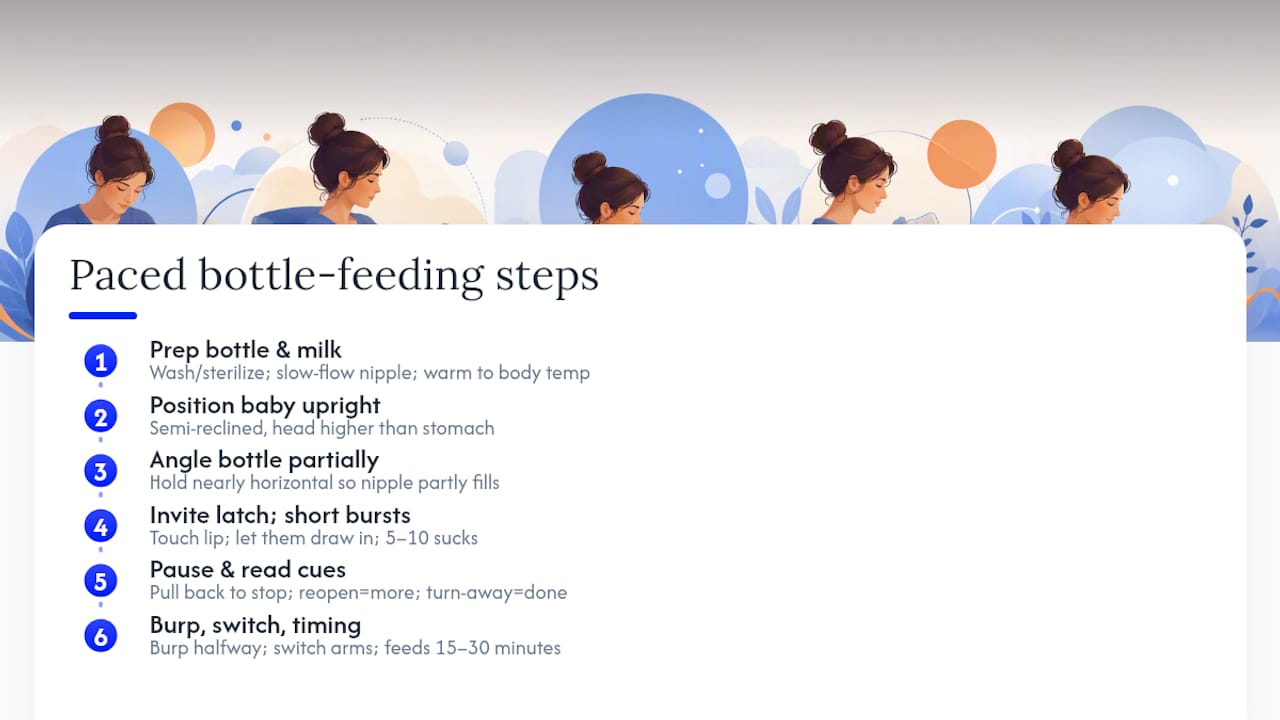
2. Position your baby upright. Hold your baby in a semi-reclined, upright position with their head supported and higher than their stomach. This isn’t the classic cradle-and-tilt-back hold; it’s closer to how they’d sit at the breast.
3. Hold the bottle nearly horizontal. Tip it just enough that the nipple fills partway with milk, not completely. CDPHE WIC guidance points out that keeping the nipple only partly filled forces your baby to actively suck rather than simply swallow a steady flow, which is the entire mechanism behind paced feeding.
4. Invite the latch instead of forcing it. Touch the nipple to your baby’s top lip and let them draw it in on their own, aiming for the nipple to rest on top of the tongue, not jammed toward the back of the mouth.
5. Feed in short bursts. Let your baby take 5 to 10 sucks, then gently pull the bottle back so the nipple tips down and flow stops. Hold that pause for a few seconds before offering it again.
6. Read the pause. A calm baby who reopens their mouth is ready for more. A baby who turns away, relaxes their hands, or slows their sucking rhythm is telling you they’re full or need a break.
7. Burp and switch sides. Halfway through the feed, burp your baby and switch which arm you’re cradling them in, the same way you’d switch breasts during nursing.
8. Watch the clock loosely. A full paced feed commonly runs 15 to 30 minutes. If your baby is finishing in five minutes, the flow is likely too fast for their pace.
Pro Tip: If your baby fusses the moment you pause, don’t pull the nipple out completely. Tip the bottle downward while leaving the nipple in their mouth. They keep the comfort of sucking, flow slows to a trickle, and the transition into the pause feels far less like a rug pull.
Why Won’t My Baby Pace Feed? Common Fixes
Almost every early stumble with paced feeding traces back to one of four things: flow speed, nipple shape, timing, or a caregiver instinct to finish the bottle.
- Fussing at every pause. Tip the bottle down instead of pulling the nipple out. Keeping contact and slowing flow gradually is far gentler than an abrupt stop.
- Milk flows too fast even with pauses. Drop to a slower nipple size or hold the bottle flatter. A newborn or size 0 nipple, paired with a flatter angle, is the most common fix.
- Baby refuses the bottle outright. Try a slow-flow nipple with a wider, breast-shaped base, and attempt the feed during a calm, unhurried moment rather than when your baby is already frantic with hunger.
- Baby seems distressed, gulping, or coughing during feeds. Stop, reposition upright, and slow the pace further. If choking, gagging, or a bluish tint around the lips ever shows up, stop the feed and contact your pediatrician right away, per CDC bottle-feeding guidance.
Most of these fixes come down to giving your baby more control, not less. If a fix doesn’t click in a session or two, it’s worth a quick check with your pediatrician rather than pushing through.
Which Bottles and Nipples Work Best for Paced Feeding?
The right gear does half the work for you. Look for a slow-flow, wide-based nipple designed so it fills only partway when held horizontal. That partial fill is what keeps your baby actively sucking instead of gulping a steady stream, which lactation guidance from KellyMom flags as one of the most overlooked details in successful paced feeding. Many parents move up a nipple size long before their baby actually needs it. Stay at newborn or size 0 longer than feels natural.

Beyond flow rate, prioritize bottles that are easy to fully take apart and sterilize, since the CDC recommends sterilizing feeding equipment regularly through at least the first year. Never add cereal or other solids to a bottle. It’s a choking risk, not a sleep aid.
A few features worth shopping for:
- A hands-free bottle holder that keeps the bottle steady at the near-horizontal angle paced feeding requires, which is especially useful while you’re still building muscle memory for the hold
- An eco-friendly borosilicate glass bottle that pairs cleanly with slow-flow nipples and holds up to repeated sterilizing without clouding or retaining odors
- A soft silicone feeding bottle shaped for an ergonomic grip, which makes it easier to hold the flatter angle paced feeding calls for through a full 20-minute feed
If you want a broader rundown of nipple shapes and flow rates before you buy, our guide to choosing baby bottles breaks down which features actually matter versus which are marketing noise.
How Do You Teach Other Caregivers to Pace Feed?
Consistency between parents, grandparents, and daycare providers is what makes paced feeding stick. A quick demo beats a long explanation every time.
- Show the hold first. Demonstrate the upright position and near-horizontal bottle angle before handing over the bottle.
- Narrate the pause out loud. Count “five, six, seven” sucks, then say “pause” as you tip the bottle down, so the caregiver hears the rhythm, not just sees it.
- Point out the cues. Show them what a “keep going” reopened mouth looks like versus a “done for now” turned head or relaxed hand.
- Flag the one rule that matters most. Never prop the bottle and walk away. It’s the single habit that undoes every benefit of paced feeding, and the CDC specifically warns against it.
For pumped milk, label bottles with the date and time, and brief daycare staff or night-shift caregivers on flow rate and pause timing the same way you’d brief a partner. The technique only works if everyone feeding your baby uses it the same way.
Who’s Behind This Guidance and How Do We Know It’s Safe?
At Thehappybabystore, every feeding product we recommend is chosen against medical-grade safety standards, not just aesthetics, and each is child-tested before it ever reaches a product page. We built our feeding lineup specifically around the mechanics paced feeding requires: partial nipple fill, ergonomic holds, and materials that survive repeated sterilizing without breaking down.
Paced feeding isn’t a trick to make a baby eat less. It’s a way to let a baby’s own body set the pace, with a caregiver simply following along.
What’s the Best Way to Start Pace Feeding Tonight?
Paced bottle feeding works because it puts the sucking effort back on your baby, turning a passive bottle feed into an active, breast-like rhythm that supports self-regulation.
| Point | Details |
|---|---|
| Flow control is the mechanism | Keep the bottle horizontal and the nipple only half filled so your baby has to work for each mouthful. |
| Timing signals success | A well-paced feed usually runs 15 to 30 minutes; a five-minute bottle likely means flow is too fast. |
| Leftover milk is a good sign | Stopping mid-bottle shows your baby is regulating their own fullness, not skipping a meal. |
| Gear matters more than most parents think | A hands-free bottle holder or ergonomic silicone bottle from Thehappybabystore makes holding the correct angle far easier through a full feed. |
Is Paced Feeding Overhyped or Underused?
Most advice on paced feeding treats it like a fussiness hack, something you deploy when a baby seems gassy or spits up too much. That framing undersells it. The real value is that it hands feeding decisions back to the baby, and that shift in control matters even for babies who feed perfectly well on a standard bottle.
Where conventional advice tends to fall short is nipple flow. Parents get told to “try paced feeding” without anyone mentioning that a fast-flow nipple defeats the entire technique before it starts. You can tip the bottle at the perfect angle and pause on schedule, and it still won’t work if milk pours out the moment your baby’s lips close around the nipple.
If you’re starting today, prioritize the nipple flow rate before you touch the hold or the pausing rhythm. Get that one variable right, stay at a slower flow longer than feels intuitive, and the rest of the technique tends to fall into place with far less trial and error
Ready to Set Up for Paced Feeding at Home?
Thehappybabystore built its feeding lineup around the exact mechanics paced feeding needs, not general-purpose bottles retrofitted with a slower nipple. Every bottle and holder in our feeding collection is designed for the near-horizontal hold and partial nipple fill the technique depends on, tested against medical-grade safety standards before it reaches your cart.
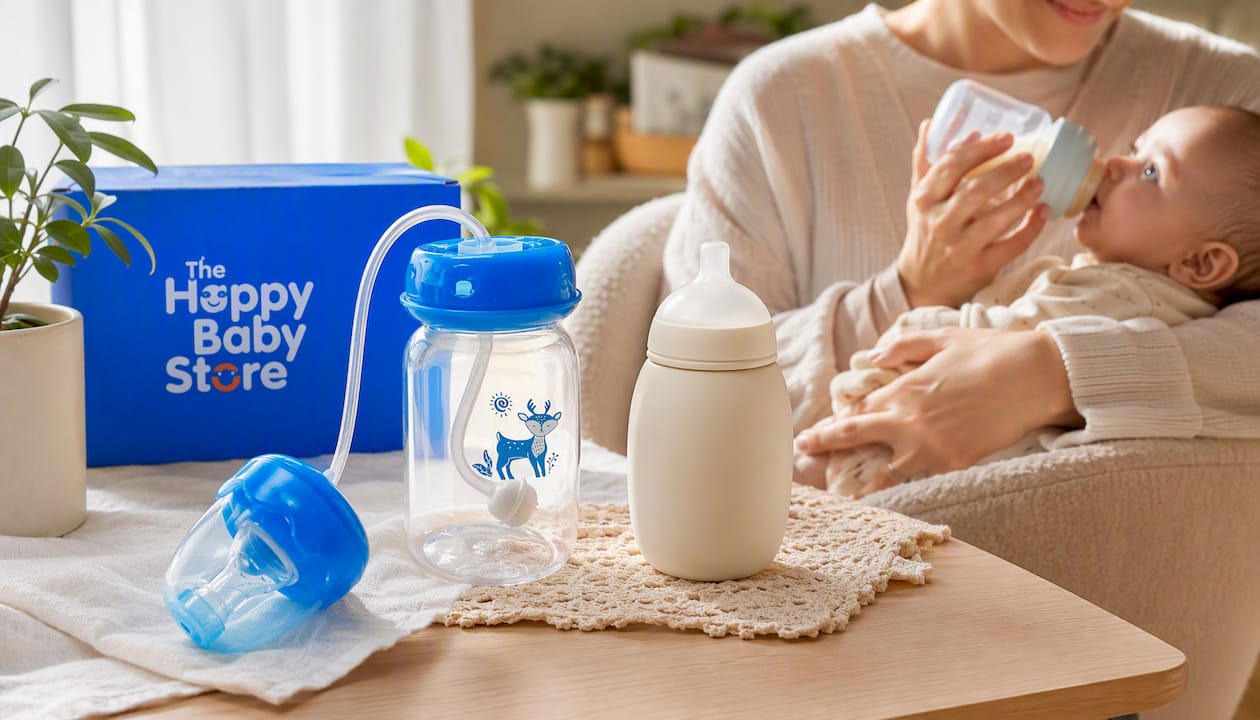
If you’re assembling a paced-feeding setup tonight, start with our hands-free bottle holder to steady the angle while you build muscle memory, then add a borosilicate glass bottle or soft silicone bottle depending on whether you prefer glass or a softer, ergonomic grip. Pair either with our bottle warmer and sterilizer to keep every feed prepped and sanitized without extra steps. Browse the full feeding collection at Thehappybabystore and put together the setup that fits how your family feeds tonight.


