


Yes, bottle warmers can be safe when you use them correctly, but improper use creates real burn and overheating risks for your baby. Following manufacturer instructions, testing the milk’s temperature before every feeding, and never microwaving a bottle are the qualifiers that separate a safe warming routine from a dangerous one. Guidance from the CDC and recall data from the CPSC back up this conditional yes.
TL;DR:
- Overheating and malfunctioning are common risks, especially in older units, making regular inspection and avoidance of damaged devices essential.
- Testing milk temperature with a wrist or thermometer for every feeding is critical to prevent burns caused by uneven heating or hot spots.
- Never microwave bottles or use improvised heating methods, as these significantly increase the risk of hot pockets and mouth injuries.
- Safety features like auto shutoff, stable bases, and cordless designs are more important than heating speed when choosing a bottle warmer.
- Many babies are content with room-temperature milk, which eliminates the need for warming devices and reduces associated burn hazards.
Table of Contents
- The Real Risks and Hazards of Bottle Warmers
- How Bottle Warmers Work and What Temperature Is Actually Safe
- Your Bottle Warmer Safety Checklist
- Do You Even Need a Bottle Warmer?
- How The Happy Baby Store Builds Safety Into Every Bottle Warmer
- Where to Read More on Bottle Warmer Safety
- What Actually Matters Here, According to Enrique
- Feed With Confidence, Not Guesswork
- Sources
The Real Risks and Hazards of Bottle Warmers
A baby’s skin is thinner and more sensitive than an adult’s, so it burns faster and at lower temperatures than most parents expect. That’s the core reason bottle warmer safety deserves your full attention, not a quick glance at the box.
Device failure is a documented concern, not a hypothetical one. The CPSC recall database includes cases where bottle warmers overheated, smoked, or malfunctioned badly enough to trigger a formal recall. Faulty heating elements and worn wiring are usually to blame, and they tend to show up in older units or ones that have been dropped or exposed to spilled liquid.
Daycare and childcare settings carry their own pattern of incidents. According to Nationwide’s analysis of childcare hazards, most bottle warming injuries in group care trace back to tipped units and unsecured cords rather than the warming technology itself. A busy caregiver juggling several infants is far more likely to knock over an unstable warmer than a parent working one bottle at a time at home.
Common hazard categories to watch for include:
- Scald burns from milk that heats unevenly or exceeds a safe temperature
- Electrical malfunctions, including overheating, smoking, or short circuits in aging units
- Cord-pull accidents where a curious toddler yanks a warmer off a counter
- Tipping incidents in daycare settings where warmers sit too close to an edge
- Burns from improvised methods like microwaving or stovetop reheating
Emergency rooms treat thousands of scald burns in young children every year, and kitchen appliances (including feeding equipment) are a recurring cause. Skip the microwave and the slow cooker entirely. Neither device heats liquid evenly, and both can create pockets hot enough to injure a baby’s mouth and throat even when the bottle feels fine from the outside.
How Bottle Warmers Work and What Temperature Is Actually Safe
Most bottle warmers rely on one of three heating methods, and each comes with its own trade-offs.
- Water-bath warmers circulate heated water around the bottle, which tends to warm milk evenly but takes a few extra minutes.
- Steam or steamless warmers use short bursts of heat and often finish faster, though they can create hot spots if you don’t follow the timing guide.
- Air warmers heat the surrounding air rather than water, which is gentler but slower for cold bottles pulled straight from the fridge.
None of these methods matter much if you don’t know the target temperature. Body temperature, around 98°F, is the comfort zone most experts recommend, and IBCLC guidance on warming breast milk points to a safe band of roughly 98 to 102°F. Once milk climbs past 104°F, you risk breaking down proteins and antibodies in breast milk, according to guidance from Good Housekeeping’s bottle warmer testing. The CDC’s handling guidelines reinforce the same principle: gentle, gradual warming preserves milk quality better than a quick blast of high heat.
Before you offer any bottle, run these checks:
- Do the wrist test: a few drops on the inside of your wrist should feel warm, not hot.
- Use a bottle thermometer if you want a precise reading instead of guesswork.
- Shake or swirl the bottle to mix any hot spots evenly through the milk.
- Never trust a bottle that came out of a microwave, even if the outside feels cool.
Your Bottle Warmer Safety Checklist
A little routine goes a long way toward eliminating the guesswork. Run through these steps every time, and warming becomes second nature instead of a source of anxiety.
Before you warm:
- Confirm your bottle is compatible with the warmer. Glass, plastic, and silicone bottles don’t always heat the same way.
- Read the manufacturer’s manual once, in full, before first use.
- Set the unit on a flat, stable surface away from counter edges and out of reach of curious toddlers.
While you warm:
- Select the correct setting for the milk type (breast milk generally needs gentler settings than formula).
- Route the power cord away from where a child could grab or trip on it.
- Test the bottle’s temperature before every single feeding, no exceptions.
- Never leave the warmer running unattended in a room with unsupervised children.
After you warm:
- Remove the bottle promptly once it reaches temperature; don’t let it sit and keep heating.
- Unplug the unit when it’s not actively in use.
- Clean and descale according to the manufacturer’s schedule to prevent mineral buildup and bacterial growth.
If something goes wrong: If a bottle comes out too hot, run it under cool tap water and retest with the wrist test before offering it again. If your baby shows signs of a burn (redness, blistering, or visible pain around the mouth), stop feeding immediately and call your pediatrician.
Pro Tip: Keep a simple bottle thermometer clipped to your diaper bag. It costs less than a coffee and removes all the guesswork from the wrist test, especially at 3 a.m. when your judgment isn’t at its sharpest.
Do You Even Need a Bottle Warmer?
Plenty of babies are perfectly happy with room-temperature or even cold milk, which means the warming step, and every risk attached to it, becomes optional. Good Housekeeping’s testing notes that many babies show no preference at all, so it’s worth testing yours before investing in extra gear.
If your baby does prefer warm milk, you have low-tech options that carry less risk than an electric appliance:
- A warm water bath: submerge the bottle in a bowl of warm (not boiling) water for a few minutes.
- Running warm tap water directly over the bottle, rotating it for even heat.
- An insulated bottle that keeps milk at a stable temperature during travel, skipping the need to reheat at all.
Skip the warmer entirely if the unit shows any sign of damage, if you’re in an unattended daycare setting without supervision, or if your bottle material isn’t listed as compatible. Convenience matters, but it’s never worth trading for a preventable burn.
How The Happy Baby Store Builds Safety Into Every Bottle Warmer
Thehappybabystore designs its warming products around the exact risks pediatric experts flag most often: uneven heat, exposed cords, and units that are awkward to use one-handed at 2 a.m. The Portable Bottle Warmer gives traveling parents a cordless option that avoids the trip-and-pull hazard tied to countertop units. For families who want a dual setup, the Double Bottle Warmer and Sterilizer combines warming with sterilizing in one footprint, and the USB Baby Bottle Warmer offers a compact, low-voltage alternative for car rides and travel bags.
When you’re shopping for any warmer, prioritize:
- Auto shutoff to prevent overheating if you get distracted
- Clear temperature controls instead of a single vague setting
- A cordless or short-cord design to reduce pull hazards
- Materials confirmed safe for both breast milk and formula
| What to look for | Why it matters |
|---|---|
| Auto shutoff | Stops heating before milk crosses into unsafe temperature territory |
| Stable, low-profile base | Reduces tipping risk, especially in busy childcare settings |
| Cordless or short-cord design | Removes the pull hazard curious toddlers create |
| Compatibility with your bottle material | Prevents uneven heating or chemical concerns tied to the wrong plastic |
Where to Read More on Bottle Warmer Safety
A few sources are worth bookmarking if you want to stay current on this topic. The CDC’s breast milk handling page lays out official storage and warming rules. The CPSC recall search lets you check any specific model against known safety notices before you buy or after you already own one. Good Housekeeping’s bottle warmer testing offers hands-on product comparisons. The CDC’s formula preparation guidance rounds out the picture for families who mix formula instead of, or alongside, breast milk.
What Actually Matters Here, According to Enrique
Most bottle warmer safety advice online focuses on the wrong variable. Parents fixate on which brand or which heating method, when the research actually points somewhere else: placement, supervision, and temperature testing are what prevent injuries, not the specific gadget on your counter. The CPSC recall record shows device failures happen, but they’re rare relative to the millions of warmers in daily use. The bigger, more common risk is a parent skipping the wrist test because they’re exhausted, or a daycare worker leaving a cord dangling within a toddler’s reach.
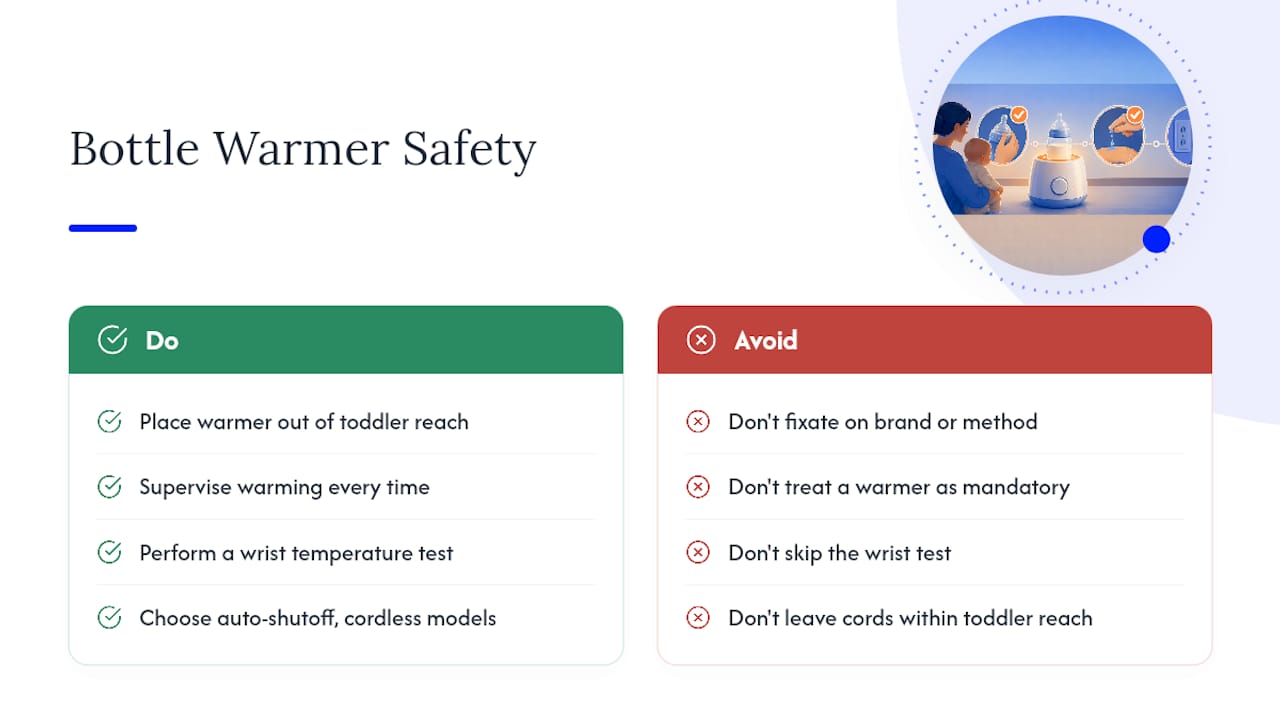
Conventional advice also oversells necessity. Plenty of babies never need warmed milk at all, and treating a bottle warmer as mandatory gear creates pressure new parents don’t need. If your baby is happy with room-temperature milk, save the counter space.
Where a warmer does earn its place, safety features matter more than speed or style. Auto shutoff and stable, cordless designs solve the actual problems the data flags, which is exactly why Thehappybabystore built its lineup around those priorities first.
— Enrique
Feed With Confidence, Not Guesswork
Thehappybabystore takes the safety questions this article just walked through and builds them directly into every warming product we sell, so you’re not left comparing vague spec sheets at midnight.
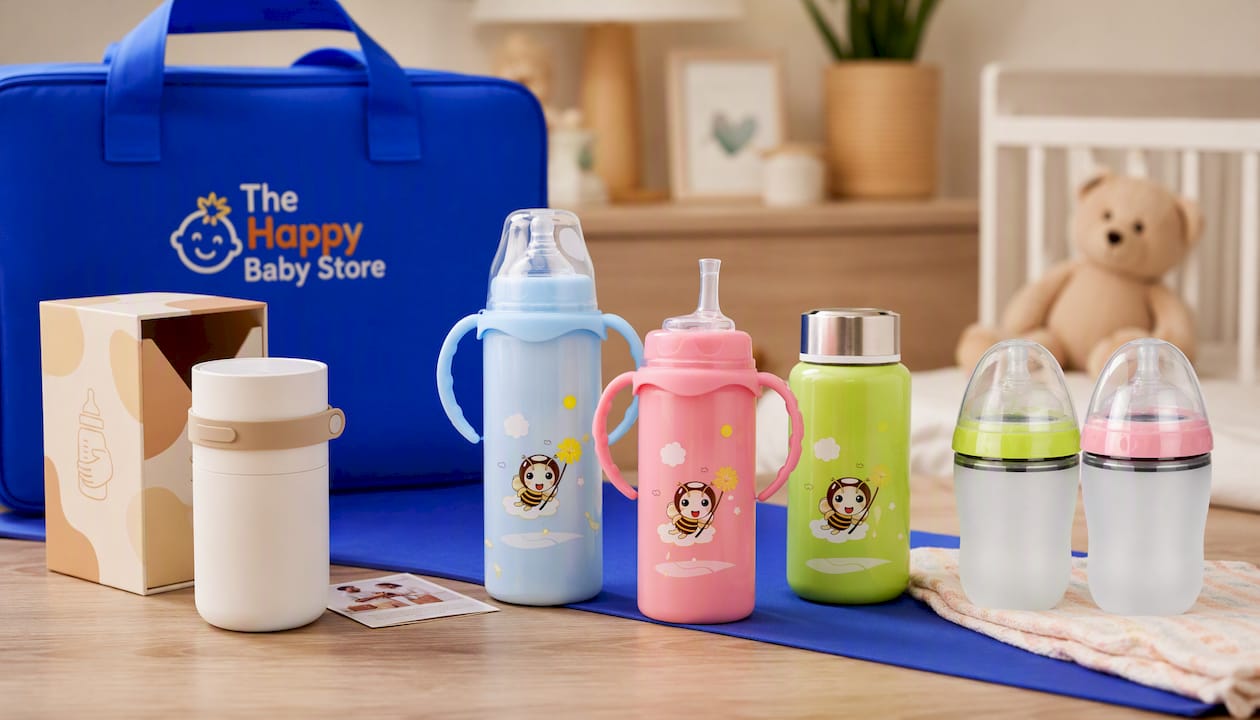
If your baby prefers warm milk, our Portable Bottle Warmer gives you cordless, auto-shutoff warming that travels as easily as it sits on your kitchen counter. Prefer to skip reheating altogether? Our insulated bottle keeps milk at a stable temperature for hours on the go, and our soft silicone bottle gives you a gentle, warmer-compatible option built for sensitive little mouths. Every product is checked against the exact hazards pediatric guidance flags most: uneven heat, loose cords, and materials that aren’t built for repeated warming. Browse the full feeding lineup and pick the option that matches how your family actually feeds, day or night.
Sources
- Handling breastmilk — CDC
- Recalls — U.S. Consumer Product Safety Commission (CPSC)
- Bottle warming hazards in childcare centers — Nationwide
- Do you need a bottle warmer? — Good Housekeeping


